Signs of stress that your dog wants you to know…
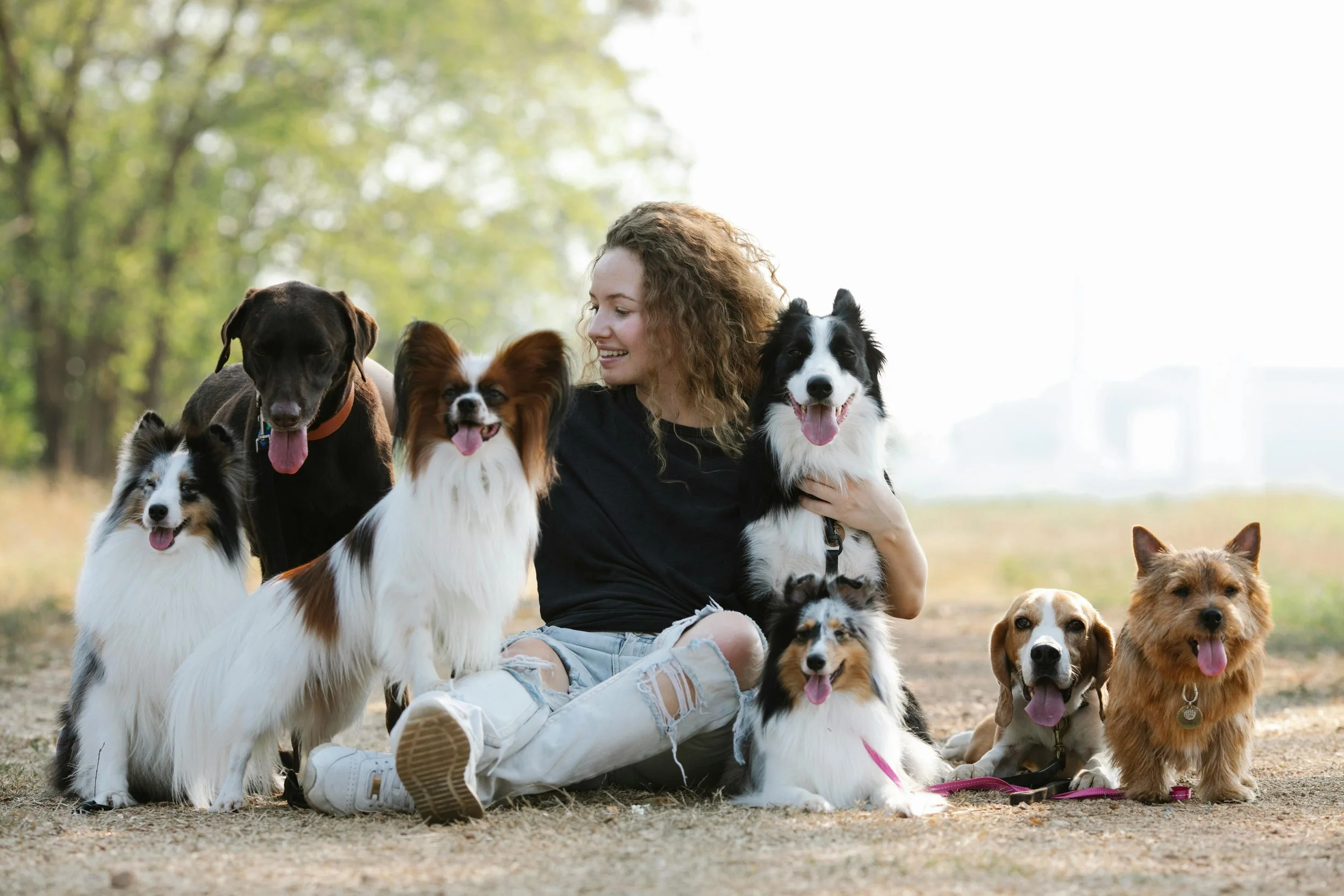
We are tightly bonded with our furry friends and they can come everywhere with us, but it is undeniable that we are different animals who work very differently. Communication is a big way we differ and our dogs communicate all the time in subtle ways that can be easy to miss. Dog’s body language is a primary tool for telling us how they are feeling and if we understand this then we can better meet their needs.
Calming Signals
When dog’s feel unsure, uneasy, uncomfortable, anxious or stressed, they can show body language behaviours called ‘calming signals’. These are signs that they are trying to calm themselves or make themselves submissive to a potential threat. These signs should be observed within in their context as they don’t always indicate stress; if they are accompanied by other stress signals and the body language is out of place for the situation then it usually indicates anxiety.
Lip licking
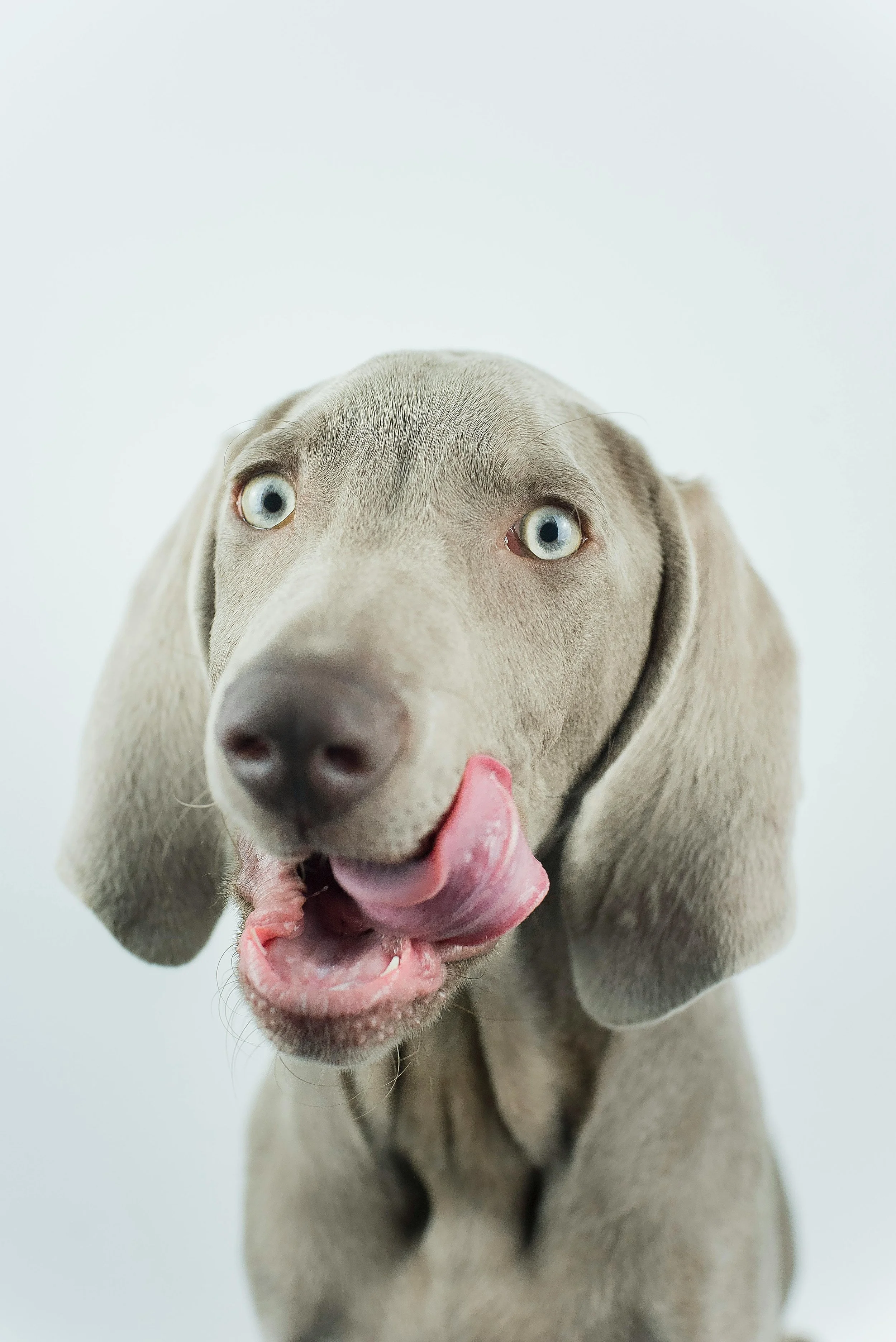
Dog’s love their food and don’t hesitate to get stuck in with treats and tasty food. However, if a dog is excessively licking their lips outside of food then they may be feeling a bit unsure and anxious. Lip licking is a displacement behaviour and it distracts the dog from the situation and releases some of the anxious energy that they are feeling.
Yawning
Dogs can get very sleepy especially after a good run and roll around in the woods, but when a dog is aware of their space and not about to sleep then yawning can be a sign of anxiety.
Whale Eye
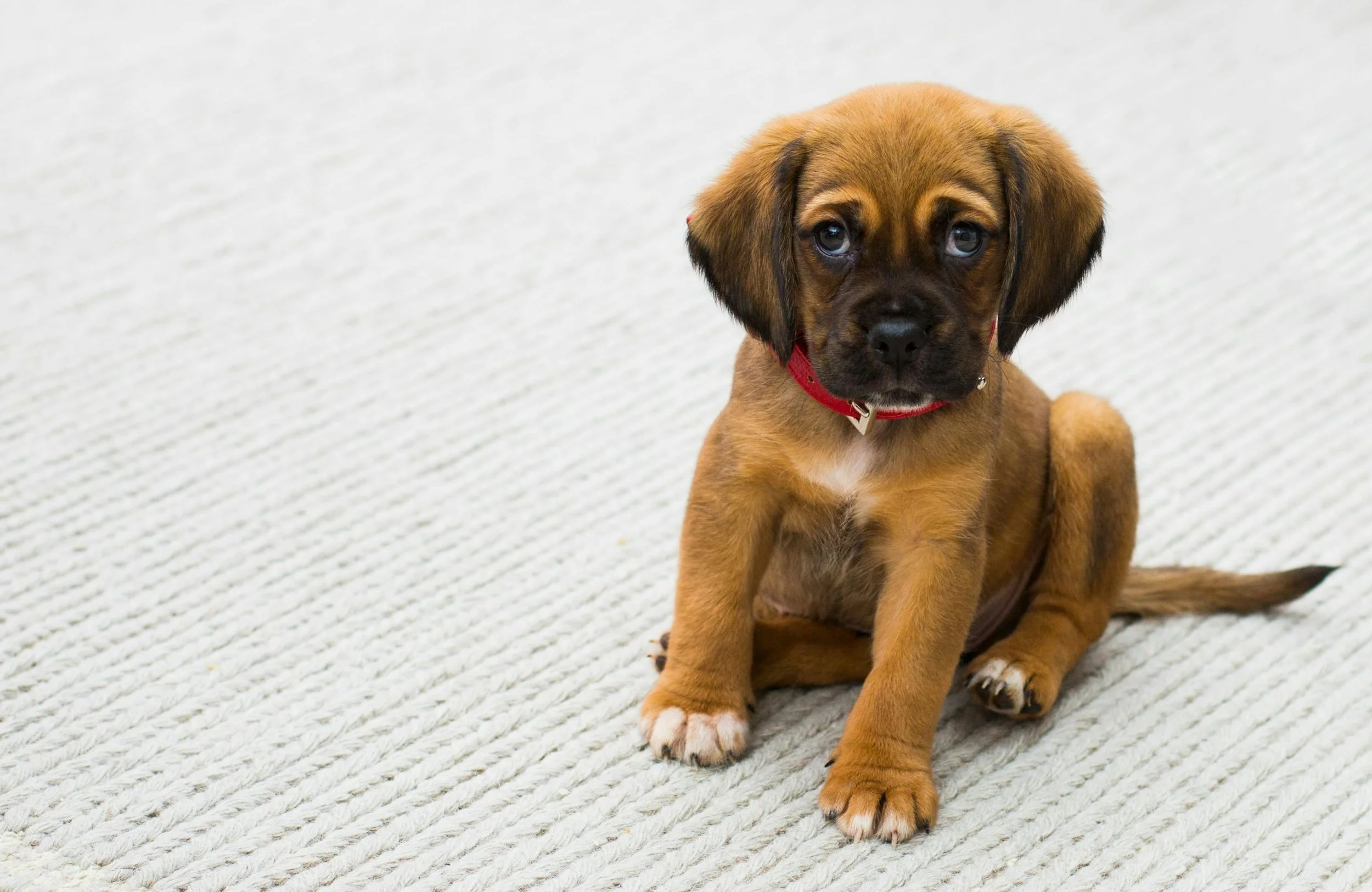
This sign is a surprising one as we often depict dog’s eyes as being very soppy and cute when we see the outside whites. However, when a dogs head isn’t facing where they are looking and the whites show, the dog is feeling threatened or anxious.
Shaking it off
Dogs naturally shake when their coat gets wet to remove excess water, but when this happens outside of that situation, it is a clear sign of shaking off nervous energy and stress.
Sniffing, Snuffing and Sneezing
Sniffing is a way that dogs self soothe and it often calms their nervous system. If they start sniffing the ground as another dog approaches then it can be a sign that the dog is feeling a little unsure. Sneezing is also a sign that your dog is relieving stress building up in their body.
Scratching
This is commonly overlooked as dogs can often scratch but if this is combined with other signals then it is likely to be a displacement behaviour to release tension in their body from feeling stressed.
Turning away
A dog may turn their head or full body away from a person, dog or object to show they mean no harm and to reduce anxious energy from building in their body.
Crouching body and ears down
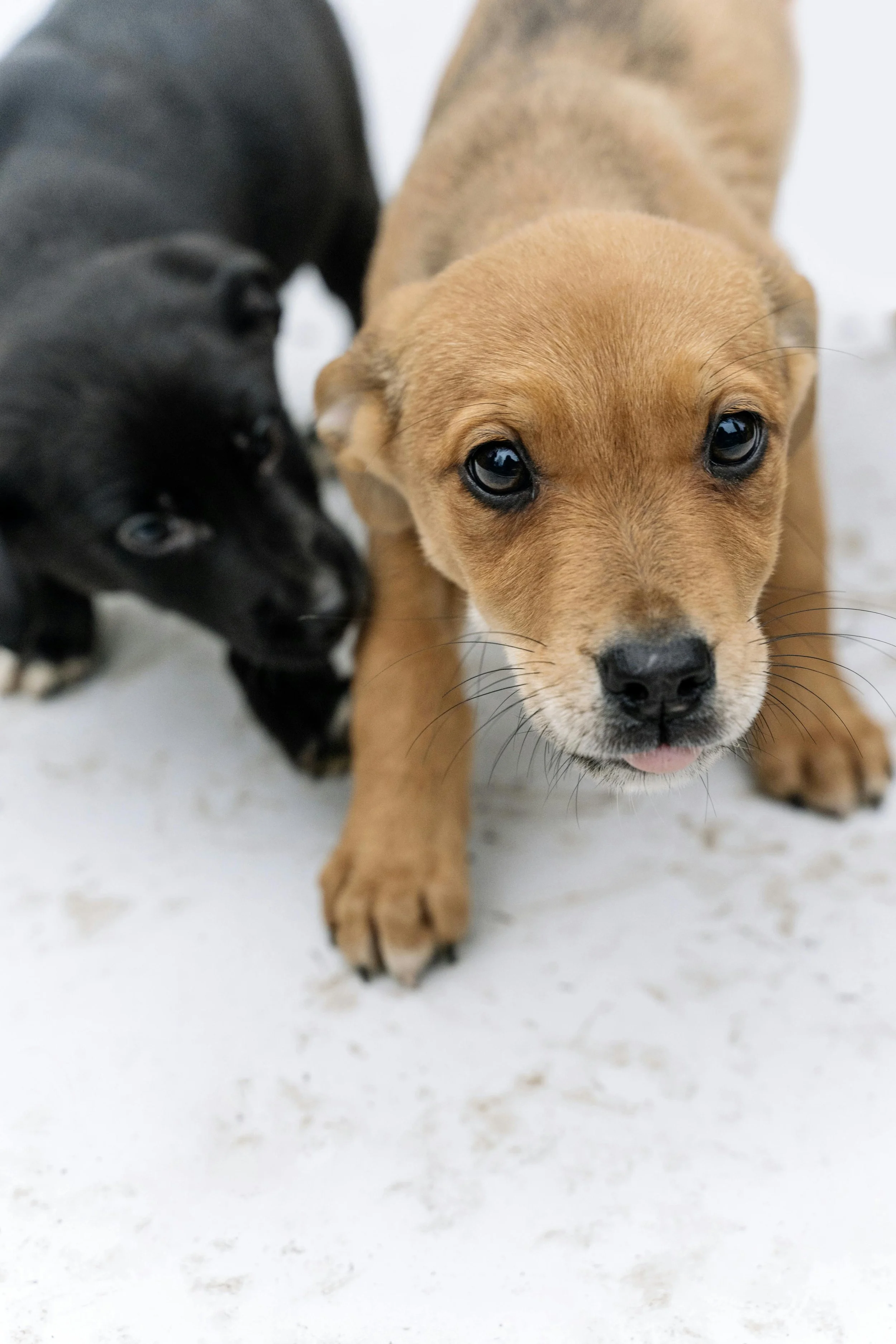
When dogs crouch and lower their ears, they are trying to make themselves seem smaller as a sign that they are trying to show that they are non-threatening by making themselves smaller.
Panting
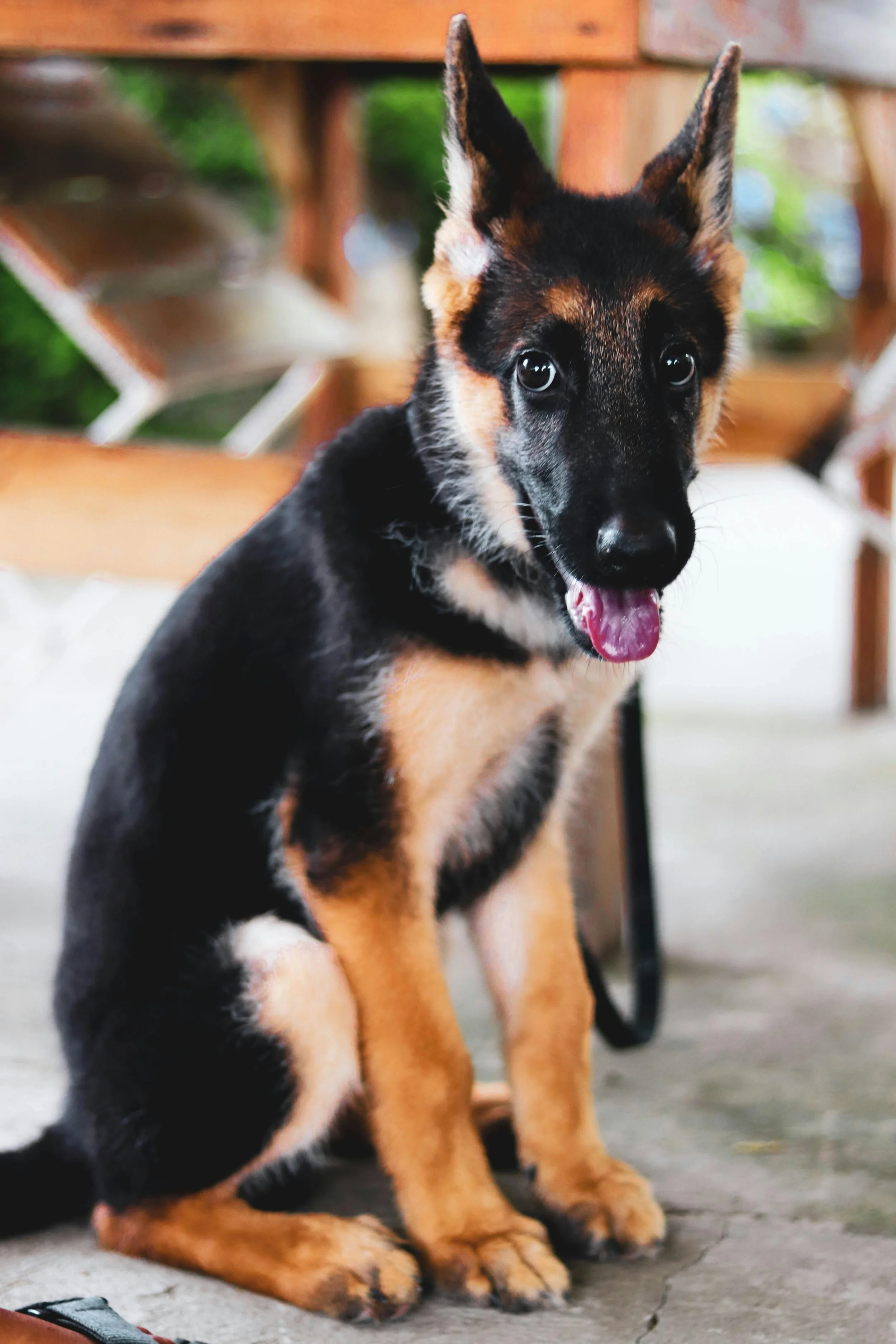
Dogs pant as a way to cool themselves down as they don’t sweat like we do. When the panting is happening when it isn’t very hot and the dog hasn’t been exercising, then it is a stress signal.
Tail tucked
A dog’s body is fluid in movement when they are happy, their vertebrae straight and their tail in its natural position with ease of movement. When a dog is stressed, they tuck their tail in between their legs and their spine is in tension. This is a clear sign of high stress as the tail covers the scent glands which are usually used in confident greetings but when covering these, it shows they are feeling vulnerable.
Raised paw
In working dogs, they may raise a paw when they are concentrating but in other dogs this can be a sign of uncertainty. The paw should be checked in case there is something uncomfortable or trapped in the paw pads. If other stress signals are showing then it is a sign that the dog isn’t feeling comfortable.
Hiding or escape behaviour (bolting)
This is a method of ‘flight’ when the dog’s nervous system gets overwhelmed and leads them to seek a safe ‘den’. This can be triggered by separation anxiety, physical pain and loud noises like fireworks and thunderstorms.
Waggy tails
It is a myth that a wagging tail always means a happy dog. In the context of the rest of their body, if they are tense everywhere but wagging their tail then this is a sign of stress and threat.
Fooling around
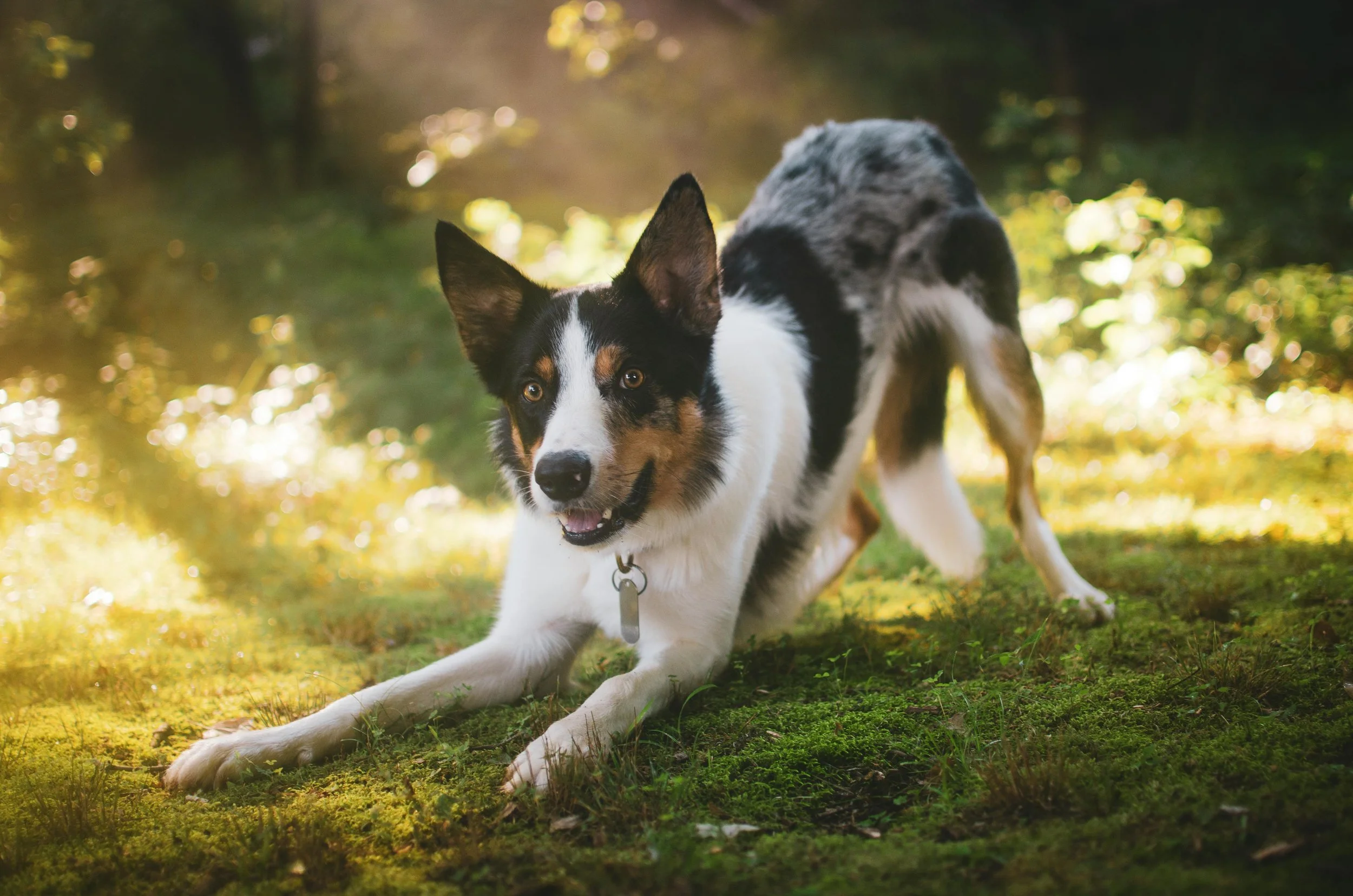
Dogs are very happy and excitable about lots of things that seem simple to us, which is why fooling around is a commonly missed sign of stress. A fooling around behaviour is a ‘fawn’ stress response and it involves dogs acting silly, hyperactive, or overly playful. Instead of the fight or flight response, this is a form of frantic energy. Dogs may climb all over and lick your face, do zoomies, jumping up and play bow as a way to relieve tension when they aren’t actually in a playful mood. The fooling around includes stiffness in their body and tail, and wide eyes compared to real playing where they are relaxed.
What to do when you see these signals…
Firstly, check what changes may have just happened to cause your dog to give these signals. Did someone enter the house or room, is there a noise, an approaching or new dog?
Remove your dog from the situation or remove the trigger.
Create a safe space that the dog can retreat to. This may be a crate with a blanket over the top if they find that comforting or a quiet room.
Stay calm and keep your movement slow and gentle; keep your voice soft and slow. Dogs pick up on our body language and often look to us to see how they should behave and whether they should be worried. If we show them that all is okay and calm then they will feel reassured more than if we act stressed and frantic.
Don’t force a dog to face their fear and never punish their behaviour as this will create more fear and anxiety.
Use a distraction such as a chew toy, treat dispensing puzzle or play a ‘find it’ game to engage the dog’s senses and distract them. These sensory activities are calming as they involves tasting and smelling alongside problem solving and eating yummy treats.
A consistent routine of meals, walks and sleeping is a good long-term management for reducing stress in dogs and it creates stability to their day to day.
Exercise and enrichment activities on a daily basis will improve your dog’s overall mental wellbeing and reduce stress and anxiety.
Use positive reinforcement to improve socialisation over certain stressful situations.
Now you know about some basis communication signals, your dog will feel more understood and happier and relaxed. Your bond will grow and you will be able to better meet their mental and physical needs.